
What to Do If You See a Downed Power Line: Safety Distances, 911 Protocols & Step Potential
High-voltage electric safety guide detailing step-potential hazards, vehicle entrapment survival techniques, and emergency dispatcher notification procedures.
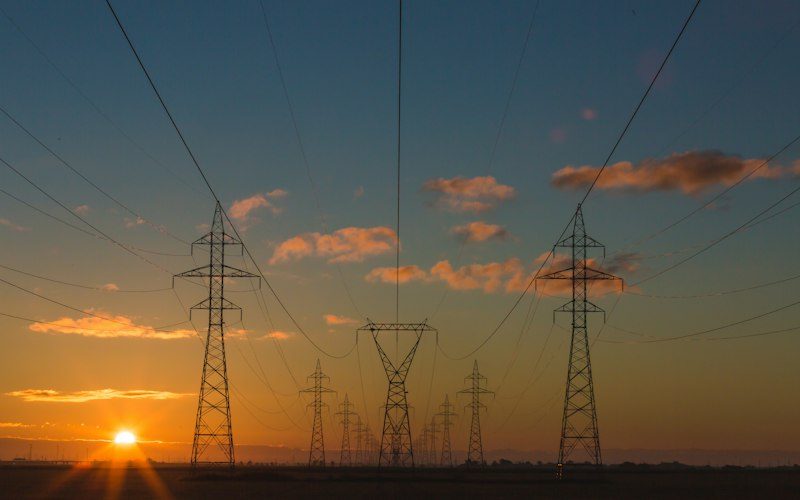
During severe thunderstorms, winter ice storms, tornadoes, and high-wind gale events, trees fall across overhead utility easements, tearing down live, high-voltage electrical distribution wires into suburban roadways, residential yards, school zones, and metal fences. High-voltage electrical lines carry deadly currents operating between 2,400 volts to over 34,500 volts. Even downed power lines that are silent, not sparking, or appear dead can remain energized or become suddenly re-energized by automated utility substation equipment. Understanding high-voltage step potential hazards, maintaining critical clearance perimeters, and knowing vehicle entrapment survival procedures are vital life-safety skills.
The Physics of High-Voltage Ground Step Potential
Most people mistakenly believe that electricity flows directly into the ground and vanishes harmlessly when a wire falls. In reality, when an energized high-voltage line contacts the earth, the ground acts as an enormous electrical resistor. Electrical current radiates outward from the point of contact in expanding concentric circles of decreasing voltage, creating a dangerous phenomenon known to electrical engineers as Step Potential.
How Step Potential Electrocutes from a Distance
Imagine dropping a stone into water; ripples expand outward in circles. Near the downed wire, ground voltage is near full line voltage (e.g., 7,200 volts). Ten feet away, ground voltage may drop to 4,000 volts. Twenty feet away, it may measure 1,500 volts:
If an unsuspecting individual walks toward or away from the downed wire with an ordinary walking gait, their front foot might land on ground at 4,000 volts while their trailing foot remains on ground at 2,500 volts. This creates a massive 1,500-volt potential difference across the person's body. Current enters through one leg, travels upward through the pelvic cavity and torso, and exits through the other leg, causing immediate ventricular fibrillation, catastrophic cardiac arrest, and internal organ trauma without ever physically touching the wire.
Critical Safety Rules Around Downed Lines
Whenever you encounter a fallen power line or damaged electrical equipment, immediately execute these four non-negotiable safety rules:
1. Maintain a Minimum 35-Foot Safety Perimeter
Stay at least 35 feet away in all directions—equivalent to the length of a full-size school bus. During wet weather or when lines are touching metal chain-link fences or saturated soil, expand this perimeter to at least 100 feet, as wet soil conducts electricity over vastly greater distances.
2. Never Assume a Downed Line Is Dead
High-voltage lines do not have to spark, smoke, hum, or dance on the pavement to be fully energized. Furthermore, regional utility distribution systems utilize automated circuit breakers called reclosers. When a fault trips a circuit, the recloser automatically pulses the line with full high-voltage power two to three times in an automated attempt to burn off tree limbs. A wire that was quiet for five minutes can suddenly become live with lethal voltage without warning.
3. Beware of Conductive Fences and Wet Surfaces
If a downed power line touches a metal chain-link fence or guardrail, the entire fence line can become energized for miles down the road. Never touch fences, metal siding, guardrails, or pools of water near damaged utility infrastructure.
4. Telecommunication Lines and Triplex Cables Carry Lethal Risks
Many homeowners assume that black, insulated low-hanging cables are merely harmless cable television or telephone lines. However, overhead utility poles utilize joint-use infrastructure where high-voltage primary lines (7,200V) are positioned directly above secondary 120/240V triplex wires, which in turn hang above telecommunications lines. In a storm collapse, high-voltage lines frequently make physical contact with cable or telephone drops miles away, charging copper coax shields and messenger wires with lethal voltage.
High-Voltage Arc Flash and Blast Boundaries: NFPA 70E Standards
Downed power lines present hazards that extend far beyond static contact shock. When a high-voltage distribution conductor carrying thousands of amperes strikes a conductive medium—such as saturated soil, asphalt, or metal guardrails—it can generate a catastrophic Arc Flash and Arc Blast.
Under National Fire Protection Association (NFPA 70E) standards, an electrical arc flash is an instantaneous plasma discharge that ionizes surrounding air. Temperatures within an arc flash fireball can reach an astonishing 35,000°F (19,400°C)—four times hotter than the surface of the sun. The intense thermal radiation instantly vaporizes solid copper wires into superheated metal gas, which expands by a factor of 67,000 times in milliseconds, generating explosive blast pressure waves capable of rupturing eardrums, collapsing lungs, and throwing nearby individuals with concussive force.
Touch Potential vs. Step Potential: Mathematical Differences
Electrical engineers distinguish between two fundamental high-voltage electrocution mechanisms:
- Step Potential: The voltage gradient across the earth between a person's two feet while walking near an energized ground point. As detailed above, stepping across equipotential rings creates a voltage differential that drives lethal current up one leg and down the other.
- Touch Potential: The voltage differential between an energized object touched by a hand (such as a metal fence, streetlight pole, or car door handle) and the ground beneath the person's feet. Because the physical distance between the hand and feet bridges the full vertical circuit, touch potential carries a drastically higher likelihood of current traversing directly through the myocardium of the heart, resulting in immediate fatal cardiac arrest at much lower voltages.
Vehicle Entrapment Protocol: What to Do If a Wire Falls on Your Car
One of the most terrifying emergencies occurs when a motorist collides with a utility pole or a storm knocks a high-voltage wire across an occupied vehicle. Knowing the exact sequence of actions will save your life:
Rule 1: Stay Inside Your Vehicle (The Faraday Cage Principle)
Your vehicle's rubber tires provide insulation from ground, and the steel exterior frame acts as a protective Faraday cage, conducting electrical current safely around the vehicle compartment to the ground. You are safe inside the car. Do not panic and do not open the door to step out. Warn approaching pedestrians and emergency bystanders to stay back.
Rule 2: Call 911 from Inside the Vehicle
Dial 911 immediately and notify the dispatcher: "A high-voltage power line has fallen across my vehicle. I am trapped inside on [Street Name]. Contact the electric utility immediately for emergency circuit de-energization." Remain calmly in your seat until utility crews arrive, test the line, and officially confirm that power is cut.
Rule 3: Emergency Bailout Protocol (ONLY in the Event of Fire)
If your vehicle catches fire and you must evacuate immediately to avoid smoke inhalation or burns, you must execute a strict jump-and-shuffle evacuation:
- Open the door cleanly without touching any metal exterior frame.
- Stand on the vehicle floorboard and prepare to jump clear of the vehicle.
- Jump with both feet together, landing squarely on the ground without ever touching the vehicle and the ground at the same time. If your foot touches the ground while your hand holds the door handle, your body will complete the circuit to ground, causing instant fatal shock.
- Once your feet land together on the ground, do not walk or run. Shuffle your feet along the ground, keeping both soles touching the earth and never lifting your feet more than 1 inch apart until you are at least 35 feet away. Shuffling ensures your feet remain at the same electrical potential, preventing step potential shock.
Heavy Equipment and Commercial Contractor Protocols (OSHA 1926.1408)
Commercial crane operators, boom truck drivers, excavation backhoe operators, and dump truck drivers face acute risks when operating near overhead lines. OSHA standard 29 CFR 1926.1408 mandates strict radial clearance distances:
| Distribution Line Voltage | Minimum Clearance Distance | OSHA Safety Rule |
|---|---|---|
| Up to 50,000 Volts (50 kV) | 10 Feet (3.05 m) | Mandatory Dedicated Spotter Required |
| 50 kV to 200 kV | 15 Feet (4.60 m) | Physical Warning Encroachment Line |
| 200 kV to 350 kV | 20 Feet (6.10 m) | High-Voltage Transmission Perimeter |
| Over 350 kV (Transmission Towers) | 25 - 45 Feet | Extreme Arc Flash Exclusion Zone |
If high machinery makes physical contact with an overhead line, the operator must follow the identical vehicle entrapment protocol: remain inside the insulated cab, warn all ground personnel to stay at least 35 feet away, and never attempt to dismount unless the machine is actively on fire.
Alert Neighbors & Share Incident Status
Help your local community stay informed about this active utility interruption.
Reviewed against National Electrical Code (NEC), Federal Communications Commission (FCC) Part 4 directives, and Public Utility Commission statutory reliability standards.