
Standby Generator Sizing & Safety: Transfer Switches, Starting Wattage & Lineman Protection
A comprehensive engineering guide on sizing portable and standby generators, wiring interlocks and manual transfer switches safely, and preventing deadly backfeeding to utility line workers.

When high-voltage utility grids collapse during hurricanes, blizzards, or catastrophic equipment failures, residential emergency generators transition from convenient luxuries to lifesaving emergency equipment. A properly installed standby or portable generator powers residential life-support medical devices, keeps refrigerated medications and food cold, prevents basement sump pump flooding, and maintains essential heating and air conditioning. However, selecting the incorrect generator size or installing emergency power circuits without proper electrical transfer switches creates catastrophic hazards, including fatal carbon monoxide poisoning, house fires, and deadly electrical backfeeding that electrocutes utility linemen working on downstream distribution circuits.
Understanding Starting Surge Wattage vs. Running Rated Wattage
The single most catastrophic mistake homeowners make when purchasing an emergency generator is confusing running (rated) wattage with starting (surge) wattage. Every electrical appliance in your home falls into one of two fundamental electrical engineering categories:
1. Resistive Loads (Constant Power Draw)
Resistive electrical loads convert electricity directly into heat or light without electric motors. Examples include incandescent light bulbs, electric space heaters, toasters, coffee makers, and curling irons. Resistive loads require exactly the same amount of power to start as they do to run continuously. A 1,500-watt electric space heater requires exactly 1,500 watts the instant you turn it on and maintains that draw throughout operation.
2. Inductive Loads (High Initial Inrush Surge)
Inductive electrical loads contain electric motors, compressors, and magnetic coils. Examples include central air conditioning compressors, refrigerator and freezer compressors, well pumps, furnace blower motors, and washing machines. When an electric motor starts from a stationary standstill, it experiences an intense physical and electromagnetic phenomenon known as Locked Rotor Amperage (LRA). During the initial split-second (typically 0.5 to 2 seconds) required to overcome rotational inertia and build magnetic flux, the motor draws between two to six times its continuous running wattage.
For example, a modern 1/2-horsepower deep-well submersible water pump may require only 1,000 running watts once operating at speed, but demands an immense 3,000 to 4,000 starting surge watts to initiate water flow. If your generator lacks sufficient surge capacity, its onboard digital circuit breaker will trip immediately, or the generator engine will stall under the sudden inductive shock load.
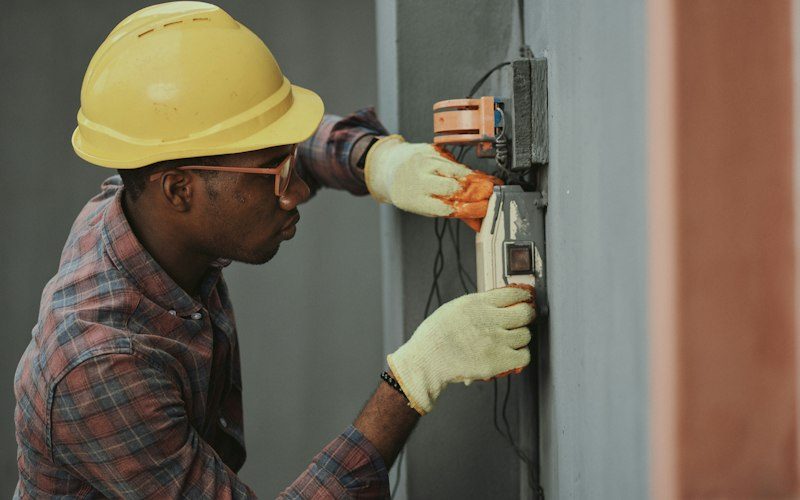
Generator Sizing Matrix: Calculating Household Emergency Loads
To accurately size a residential generator, you must calculate the combined running wattages of all critical circuits you plan to operate simultaneously, and then add the single highest starting surge wattage among your inductive appliances. Use the following engineering reference table:
| Essential Appliance | Running (Rated) Watts | Starting (Surge) Watts | Voltage Required |
|---|---|---|---|
| Refrigerator / Freezer | 700 - 800 W | 1,800 - 2,200 W | 120 V |
| Deep Well Pump (1/2 HP) | 1,050 W | 3,200 - 4,000 W | 240 V |
| Central Gas Furnace Blower | 600 - 800 W | 1,500 - 2,000 W | 120 V |
| Sump Pump (1/3 HP) | 800 W | 1,300 - 1,800 W | 120 V |
| Microwave Oven | 1,000 - 1,200 W | 1,200 W | 120 V |
| Central AC (3-Ton, 14 SEER) | 3,500 W | 9,500 - 12,000 W | 240 V |
| LED Home Lighting (10 Rooms) | 150 W | 150 W | 120 V |
| Wi-Fi Router & Modem | 25 - 40 W | 40 W | 120 V |
You can quickly compute your home's total electrical footprint using our interactive Home Generator Sizing Calculator.
The Mortal Danger of Electrical Backfeeding to Linemen
The most dangerous electrical malpractice during a blackout is the illegal practice known as "backfeeding." Backfeeding occurs when an untrained individual attempts to connect a portable generator directly into a household wall outlet using a home-fabricated male-to-male extension cord (frequently referred to as a "suicide cord").
How Backfeeding Kills Line Workers
Electrical power flows in both directions through power lines and transformers. When your home's main service breaker remains closed and you feed 120V or 240V electricity into your home's wiring via a portable generator:
- The electricity energizes your home's internal electrical branch circuits.
- Current flows out through your main breaker panel and into your utility service drop wire.
- The current reaches your neighborhood pole-mounted distribution transformer. Transformers step voltages down from utility line levels (e.g., 7,200V or 14,400V) to household levels (120V/240V).
- When generator power enters the transformer in reverse, the transformer steps that 120V back up to 7,200+ volts.
- This high-voltage current charges overhead wires miles down the street where utility linemen are working under the assumption that the circuit is dead and grounded.
Utility line workers touching backfed lines can suffer severe third-degree electrical burns, limb amputations, or fatal electrocution. In all 50 states, backfeeding is a severe violation of the National Electrical Code (NEC Article 702), municipal building codes, and state criminal utility safety statutes, exposing homeowners to felony reckless endangerment charges and massive civil liability.
Installing National Electrical Code (NEC) Compliant Transfer Switches
To safely connect an emergency generator to your home's electrical system, the National Electrical Code mandates the installation of an approved mechanical or automatic transfer switch that provides break-before-make physical isolation from the utility grid.
1. Manual Transfer Switch (MTS)
A manual transfer switch is a dedicated secondary distribution panel wired beside your main service panel. It contains dedicated circuit switches corresponding to 6, 8, 10, or 12 essential circuits (such as your refrigerator, furnace, water pump, and lights). Each switch has three physical positions: LINE (utility grid), OFF, and GEN (generator). Because the switch mechanically prevents both LINE and GEN from connecting at the same time, it is physically impossible to backfeed power onto the street.
2. Mechanical Panel Interlock Kit
A mechanical interlock kit is a heavy steel or aluminum sliding plate installed directly over your main service panel. It mechanically locks out the generator backfeed breaker whenever the main utility service breaker is in the ON position. To engage generator power, you must physically slide the plate down, which forces the main breaker into the OFF position before the generator breaker can be switched ON. Interlocks are significantly more affordable than full transfer switches and allow you to power any circuit in your panel, provided you do not exceed the generator's total capacity.
3. Automatic Transfer Switch (ATS)
Used exclusively with permanently installed whole-house standby generators (fueled by natural gas or propane), an Automatic Transfer Switch constantly monitors utility voltage. When grid voltage drops below acceptable parameters (e.g., less than 85% of nominal voltage for more than 3 seconds), the ATS signals the standby generator to start, reaches operational speed, disconnects the home from the utility grid, and transfers electrical loads to generator power in less than 10 to 15 seconds without any human intervention.
Total Harmonic Distortion (THD) and Sensitive Electronics Protection
Not all generator electricity is equal. Standard, open-frame construction generators produce crude alternating current with Total Harmonic Distortion (THD) levels exceeding 15% to 25%. While crude resistive heaters and incandescent lamps tolerate dirty power, modern sensitive microprocessors found in high-efficiency ECM furnace blowers, inverter-driven refrigerators, smart LED television panels, and home medical CPAP units can overheat, malfunction, or suffer permanent silicon degradation under elevated THD.
For sensitive domestic loads, homeowners must select an Inverter Generator producing pure sine wave power with less than 3% THD, conforming to IEEE 519 clean power recommendations. Pure sine wave inverter generators convert raw multiphase AC generated by the engine into clean direct current (DC), then digitally synthesize a pristine 60-Hertz sinusoidal AC waveform identical to or cleaner than commercial utility power.
Generator Grounding Protocols and Extension Cord Wire Gauges
Safety during generator operation extends beyond the engine compartment. Homeowners must understand grounding configurations under OSHA and NEC Article 250 rules:
- Bonded Neutral vs. Floating Neutral: When powering tools directly through generator receptacles, a bonded neutral generator (where neutral is tied to the generator metal chassis) provides standard ground fault protection. However, when connecting a portable generator to a residential transfer switch with a solid non-switched neutral, the generator must have a floating neutral. If both the house panel and generator have bonded neutrals, dual ground paths are created, causing ground loop currents that trip GFCI breakers and shock operators.
- Cord Length & Voltage Drop: Extension cords experience internal electrical resistance that dissipates voltage over distance. Using a lightweight 16-gauge lamp cord to power an 1,800W space heater 50 feet away results in catastrophic voltage drop below 105 volts, overheating the cord insulation and permanently burning out appliance motors. Always use heavy-duty, outdoor-rated SJTW 10-gauge (10 AWG) cords for loads exceeding 15 amps, and 12-gauge (12 AWG) cords for intermediate loads under 50 feet.
Best Practices for Fuel Storage and Preventative Maintenance
An emergency generator is only as reliable as its fuel and regular preventative maintenance. During widespread multi-day grid disasters, gas stations without backup power are unable to pump gasoline. Follow these fuel guidelines:
- Gasoline Stabilization: Untreated pump gasoline degrades and oxidizes within 30 to 60 days, forming gummy varnish deposits that clog carburetor jets. Always treat gasoline with fuel stabilizer (such as STA-BIL) immediately upon purchase, allowing safe storage for up to 24 months.
- Dual-Fuel & Tri-Fuel Conversion: Whenever possible, select dual-fuel or tri-fuel generators capable of running on liquid propane (LPG) or residential natural gas. Propane cylinders never expire or gum up engine fuel systems, providing decades of shelf-stable emergency reserve.
- Engine Break-In & Oil Changes: Brand-new generators require an initial oil change after the first 5 to 10 hours of break-in operation to flush metallic machining shavings. Stock at least 3 quarts of synthetic 5W-30 or 10W-30 engine oil and spare spark plugs for extended emergency runs.
Alert Neighbors & Share Incident Status
Help your local community stay informed about this active utility interruption.
Reviewed against National Electrical Code (NEC), Federal Communications Commission (FCC) Part 4 directives, and Public Utility Commission statutory reliability standards.